SATOPANTH LAKE TREK

Trek Fee
₹ 16,499 ₹18,499
Save ₹2,000 (11% Off)
  • Pick Up: Pipalkoti
  • Drop: Pipalkoti
  • Location: Pipalkoti
Note: Pick-up & drop details will be reconfirmed on WhatsApp after booking.

Overview

The Satopanth Lake Trek is not merely a path traversed, but a profound pilgrimage into the heart of the Garhwal Himalayas, a spiritual ascent aptly nicknamed “The Doorway to Heaven.” To embark on this journey is to step out of the mundane and into an ancient landscape where myth and majesty converge, earning it a deep sense of appreciation and insight.

The trek’s essence is captured in its very name, Satopanth, meaning the “Path of Truth.” This path, which begins in the cultural echo of Mana—the final inhabited village on the Indo-Tibetan border—immediately transports the traveler to a realm of legend. Insight into this trail is incomplete without acknowledging its powerful mythological roots. It is along these very slopes that the Pandava brothers, according to the Mahabharata, walked in their final quest, the Swargarohan, ascending to heaven. The mountains here seem to hum with that ancient narrative, guiding you past breathtaking landmarks like the spectacular Vasudhara Falls, where the water is said to bless those who are pure of heart.

As the journey progresses, the landscape itself transforms from lush, welcoming meadows to the rugged, awe-inspiring terrain of the high mountains. Appreciation for the sheer raw power of the Himalayas grows with every passing step, particularly when navigating the vast stretches of glacial moraine and the steep, challenging ascents. This is a trek that demands respect and fitness, yet rewards with a sense of immense achievement and proximity to the divine.

The final destination, the Satopanth Tal, is the trek’s sublime culmination. Cradled at 14,400 feet, the lake possesses a uniquely perfect triangular shape—a form that ties directly into its holiest legend: the belief that the holy trinity of Brahma, Vishnu, and Shiva meditated on its three distinct corners. The lake’s emerald-green waters lie still, reflecting the intimidating granite sentinels—Neelkanth, Chaukhamba, and Balakun—that guard its tranquil beauty. To stand on the shore of Satopanth is to experience a silence so deep it feels like the very voice of the Himalayas, offering a spiritual insight that lingers long after you have descended back to the plains. This is a journey that elevates the spirit, leaving you with an enduring appreciation for both the arduous human effort and the ineffable grace of the mountains.

Highlights

Duration 6D/5N
Difficulty Difficult
Altitude 4389 m
Batch Size 21 people
Base Camp Pipalkoti
Pick & Drop Sankri – Sankri

Itinerary

Day
1
Arrival in Mana Village (Base Camp) Meal
  • Activity: Drive from Rishikesh/Pipalkoti to Mana Village via Badrinath.
  • Altitude: Reach approximately 10,249 ft (3,124 m).
  • Detail: The day is dedicated primarily to the scenic drive deep into the Garhwal Himalayas. After reaching the area, you will acclimatize and prepare. You will be staying near the sacred town of Badrinath. Mana is officially recognized as India’s last village near the border, and exploring its unique cultural fabric and ancient rock formations like Bhim Pul sets a spiritual tone for the adventure ahead.
  • Stay: Hotel/Guesthouse at Badrinath/Mana area.

Meals

Breakfast
Lunch
Dinner
  • Activity: Trek commences.
  • Distance: Approx. 5 km | Time: 4–5 hours
  • Altitude Gain: ≈1,751 ft (to 12,000 ft / 3,658 m).
  • Detail: The trek officially starts from Mana. The path is well-defined initially, following the banks of the Alaknanda and then the Saraswati River. A key highlight is passing the magnificent Vasudhara Falls, cascading down from a great height. The landscape transitions into lush green pastures before reaching Lakshmi Van (Forest of Lakshmi), where you will set up your first high-altitude camp amidst views of towering peaks.

Meals

Breakfast
Lunch
Dinner
  • Activity: Ascent to the high-altitude camping ground.
  • Distance: Approx. 4 km | Time: 3–4 hours
  • Altitude Gain: ≈900 ft (to 12,900 ft / 3,932 m).
  • Detail: This is a crucial day for acclimatization, involving a steady ascent that takes you above the tree line. The terrain becomes rocky, marking the transition into a truly alpine environment. Chakrateertha is a sprawling, spectacular meadow surrounded by peaks, including the formidable Chaukhamba. This location is significant as it offers an unparalleled, close-up view of the surrounding mountain amphitheater and serves as the perfect base for the summit push.

Meals

Breakfast
Lunch
Dinner
  • Activity: Trek to Satopanth Tal and return to camp.
  • Distance: Approx. 10 km (round trip) | Time: 7–8 hours
  • Max Altitude: 14,400 ft (4,389 m).
  • Detail: This is the most demanding day. You start early, navigating a challenging path across glacial moraines and boulders, requiring careful footing and concentration. After a final ridge ascent, you are rewarded with the first sight of the sacred Satopanth Tal—a flawlessly shaped triangular glacial lake. You can spend time appreciating the spiritual atmosphere and the massive peaks reflected in its emerald waters. On clear days, you may also spot the steps of the mythical Swargarohini Glacier. After a fulfilling experience, you trek back to the comfort of the Chakrateertha campsite.

Meals

Breakfast
Lunch
Dinner
  • Activity: Long descent back to the starting village.
  • Distance: Approx. 9 km | Time: 5–6 hours
  • Altitude Drop: ≈2,651 ft (to 10,249 ft / 3,124 m).
  • Detail: You retrace your steps from Chakrateertha, quickly losing altitude. The long downhill walk is easier on the lungs but requires vigilance to prevent strain on the knees. You pass through Lakshmi Van once more, enjoying the familiar green trails as you move back toward civilization. Upon reaching Mana, you can feel the distinct sense of accomplishment from having completed the pilgrimage.

Meals

Breakfast
Lunch
Dinner
  • Activity: Visit Badrinath Temple (optional) and drive back to the city.
  • Detail: Depending on your schedule, you can visit the revered Badrinath Temple located nearby. Following this, you begin the long drive back to your onward destination (Pipalkoti, Rishikesh, or Haridwar), carrying with you the profound memories of the Path of Truth.

Meals

Breakfast
Lunch
Dinner

Good to know

Inclusions

  • Accommodation on Trek:
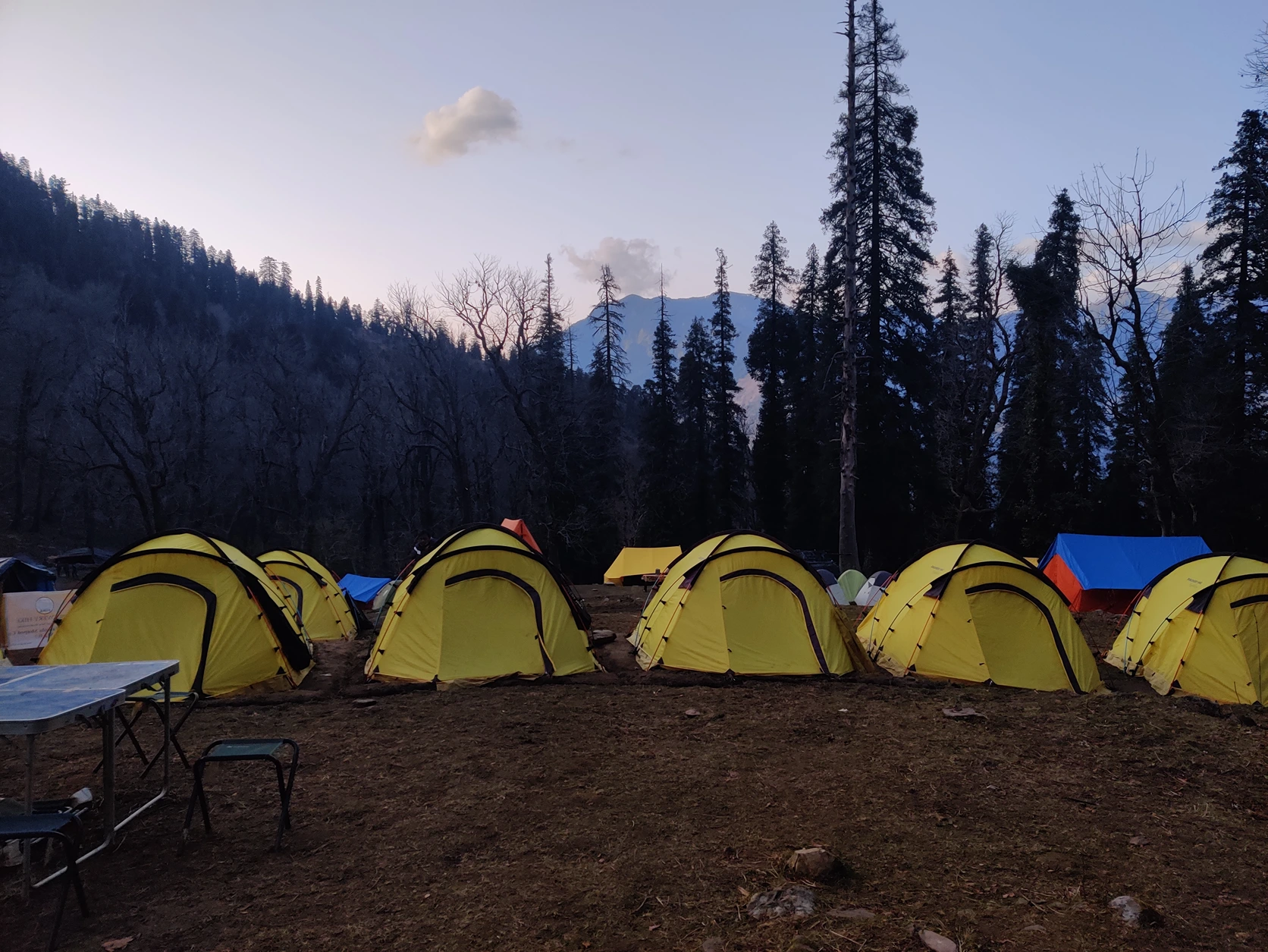
  • Campsite stays in high-quality tents on a sharing basis (twin or triple sharing).
  • Sleeping bags, sleeping mats/mattresses.
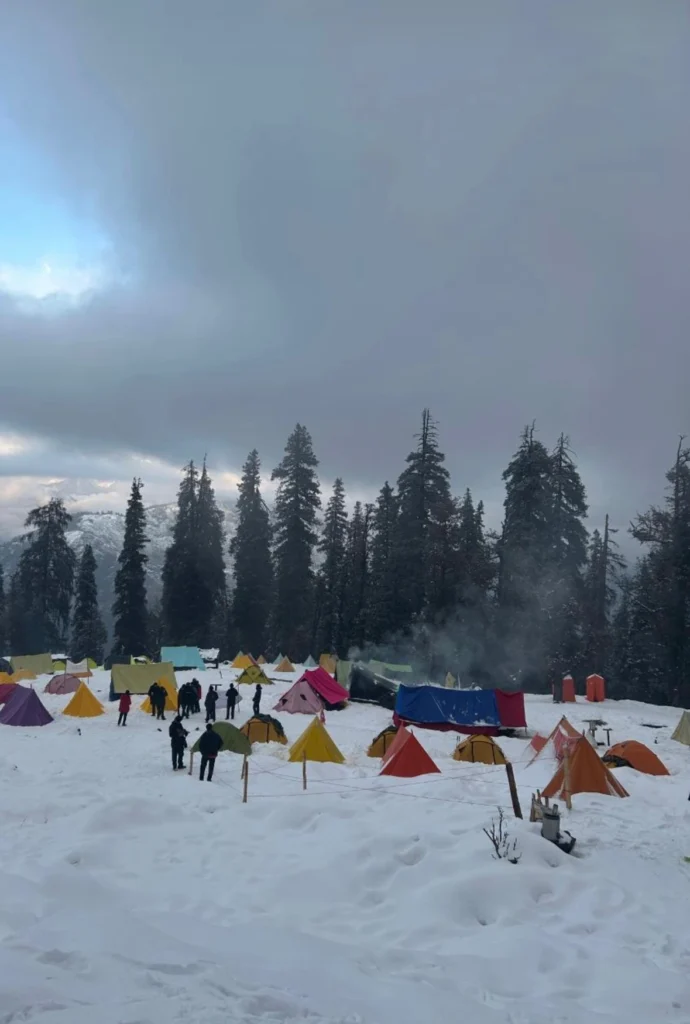
  • Common tents like a Dining Tent, Kitchen Tent, and Toilet Tents (dry pit style) on campsites.
  • Accommodation in a Hotel/Guesthouse at the base camp (e.g., Joshimath/Badrinath) on the first and last days.
  • Meals:
  • All meals (Vegetarian, often including eggs) starting from dinner on Day 1 to breakfast/lunch on the final day of the itinerary.
  • This typically includes Breakfast, Packed Lunch (on trekking days), Evening Snacks/Tea, and Dinner.
  • Boiled drinking water during the trek.
  • Staff & Safety:
  • Trek Leader: Qualified and experienced with mountaineering and first aid certification.
  • Local Guide, Cook, and Support Staff (Helpers, Porters for central logistics).
  • Safety Equipment: Comprehensive first-aid kit, emergency oxygen cylinder, oximeter.
  • Permits & Fees:
  • All necessary Trekking Permits, Forest Entry Fees, and Camping Charges for Indian Nationals.
  • Trekking Equipment:
  • Use of technical equipment like Microspikes, Gaiters, and Ropes if snow conditions require them.

Exclusions

  • Transportation (Often the biggest exclusion):
  • Transportation to and from the initial reporting city (e.g., your travel from home to Rishikesh or Dehradun).
  • Sometimes, even the transport from a major hub (like Rishikesh/Haridwar) to the base camp (like Joshimath/Badrinath) is excluded and must be booked
  • separately or paid for directly.
  • Meals during road journeys (travel days).
  • Personal Gear:
  • Personal trekking gear and clothing (trekking shoes, trekking poles, headlamp, waterproof jacket, warm gloves, sunglasses, etc.).
  • Water bottles or hydration packs.
  • Personal Expenses:
  • Any personal expenses like tips for the staff, laundry, phone calls, camera fees, or shopping.
  • Insurance & Emergencies:
  • Personal Trek Insurance (travel, medical, or emergency evacuation) is often an exclusion, though some packages do include basic accidental insurance for Indian nationals.
  • Any cost arising from an unscheduled delay, change in itinerary due to weather, roadblocks, landslides, or emergency medical evacuation.
  • For Foreign Nationals:
  • Additional fees/permit charges for foreign nationals are almost always excluded from the standard Indian trek price.

Things to Carry

I. Head & Face
Woolen Cap / Beanie

Must cover ears. Essential for retaining body heat.

Balaclava / Neck Gaiter

Crucial for summit day to protect the nose and mouth from cold wind.

UV-Protection Sunglasses

MANDATORY. Snow glare is intense and can cause snow blindness. Must be UV protected.

II. Upper Body
Base Layer (2–3)

Thermal tops (full sleeve). Must be synthetic or Merino wool. NO COTTON.

Mid Layer (2)

Fleece jacket (thick). Your primary source of warmth.

Outer/Shell Layer (1)

Padded jacket (Polyfill/Down). Heavy, windproof, and water-resistant.

III. Lower Body
Base Layer (1–2)

Thermal bottoms (leggings).

Trekking Pants (2)

Quick-dry, synthetic trekking trousers. Avoid jeans/shorts.

IV. Hands & Feet
Trekking Shoes (1 Pair)

High-ankle, sturdy, waterproof trekking boots with good grip.

Socks (5–6 Pairs)

3–4 pairs of thick woolen/synthetic trekking socks (for the day) and 2 pairs of dry woolen socks (for sleeping only).

Gloves (2 Pairs)

1 pair of woolen/fleece inner gloves and 1 pair of heavy, waterproof outer gloves.

V. Accessories
Headlamp

MANDATORY. Carry extra batteries.

Water Bottle / Thermos

Carry a 1-liter bottle and a thermos to keep water from freezing.

Sunscreen (SPF 40+) & Lip Balm

Essential for high-altitude UV protection.

Personal Toiletries & Medication

Toothbrush, wet wipes, and any personal prescription drugs.

Daypack (20–30L)

For carrying water, jacket, snacks, and personal items during the trek.

VI. Provided Gear
From Our Side

Sleeping Bag, Sleeping Mat, Tents, Crampons, Gaiters, and Trekking Poles (use optional).

How to reach

The Road Journey (Required Travel)

The journey starts from the major transit hubs and concludes at Pipalkoti for the first day. The final drive to the trailhead (Mana Village) will occur on the morning of Day 2.

Stage Route Distance Time (Approx.) Key Detail
Day 1: Transit Hub Rishikesh / Haridwar to Pipalkoti 220−245 km 7−9 hours This is a long day’s drive along the NH7 highway. Pipalkoti serves as your evening halt.
Day 2: Trek Start Pipalkoti to Mana Village (Trailhead) 80−85 km 2.5−3 hours This is a crucial early morning drive managed by your operator to reach the trek starting point after breakfast.

Travel Options to Pipalkoti (Day 1):

  1. i
    Shared Taxi/Jeep (Most Common): The most cost-effective option, departing early in the morning (around 6:00 AM) from the Rishikesh or Haridwar bus stands.
  2. i
    Private Taxi/Cab: Offers greater comfort and the ability to leave at your convenience, generally hired through your trek operator.

Final Pre-Trek Drive

On the morning of the trek (your actual Day 2), you will drive from Pipalkoti to the official trailhead at Mana Village near Badrinath. Starting the trek from Mana is necessary as vehicles cannot go further.

This two-to-three-hour drive to the higher altitude of Mana Village (≈10,249 ft) also serves a crucial acclimatization purpose before you start walking.

How to prepare your body and mind for the trek

Your Mind & Body Compass

Satopanth Lake Trek is the perfect choice for a first-time wellness trekker, but a reasonable level of fitness is essential to ensure you enjoy the experience, especially given the rapid altitude gain.

Physical Conditioning (8 Weeks Prior):

  • i
    Cardiovascular Fitness: Commit to a daily routine of 4-5 kilometers of walking or jogging. Focus on building endurance to comfortably manage the steep sections.
  • i
    Strength and Flexibility: Incorporate basic strength training (squats, planks) and gentle Himalayan-focused stretching to condition the muscles and joints for carrying a backpack.

Mental & Respiratory Conditioning:

  • i
    Mastering the Breath: Begin a routine of Pranayama (breathing exercises). Practices like Anulom Vilom (Alternate Nostril Breathing) are vital for improving lung capacity and ensuring a smooth, relaxed acclimatization at high altitude.
  • i
    Weather Readiness: Be prepared for the transformative nature of Himalayan weather. While daytime can be manageable (10°C to 15°C), winter nights are intensely cold, dropping to -4°C or lower. Our high-quality gear is provided to support your journey safely through the cold.

Refund & Cancellation

We aim for clear and fair practices regarding cancellations. We know plans can change, and our policy is designed to balance flexibility for you with the operational needs of running a trek.

If Crux Himalaya Cancels Your Trek

  • If we are forced to cancel a trip for reasons beyond our control (such as natural disasters, route closures, or governmental mandates), you will receive a Trek Voucher. This voucher is valid for one year and can be applied toward the original trek or any other available trek.

  • If the cost of the new trek is higher, you must pay the difference. If the cost of the new trek is lower, we will refund the surplus amount.

  • If the cancellation is due to insufficient bookings (fewer than three participants), you will receive a full monetary refund.

If You Cancel Your Trek

Cancellation Window Refund Notes
More than 30 days prior to the trek start date 100% refund Full refund of trek fee
Between 15 and 30 days prior to the trek start date 50% refund Balance forfeited
Within 1 to 15 days prior to the trek start date No refund Pre-booked logistics; refund not applicable

FAQs

The Satopanth Tal Trek is generally rated as Moderate to Difficult. The challenge comes from the high altitude (up to 15,100 ft or 4,600 m), long trekking days (up to 8-10 hours), and navigating difficult terrain like moraines, boulders, and steep ascents/descents, particularly beyond Laxmivan. Prior high-altitude trekking experience is highly preferred.

You should be able to cover a distance of 5 km by jogging in 30 minutes without stress, or comfortably climb 20-30 floors of stairs with a light backpack. Start a regimen of cardiovascular and strength training (like squats and core exercises) at least 6-8 weeks before the trek.

Yes, when undertaken with a professional operator who adheres to strict safety protocols. The main risk is Acute Mountain Sickness (AMS). Your safety depends on:

  • Proper acclimatization (following the itinerary).
  • Listening to your Trek Leader and reporting symptoms immediately.
  • Mandatory daily health checks (pulse and oxygen saturation).

Trek operators carry a comprehensive first-aid kit, emergency oxygen cylinders, and pulse oximeters. For severe cases, the protocol is immediate descent, and the team will coordinate local rescue efforts, including potential helicopter evacuation (at the trekker’s expense, which is why insurance is highly recommended).

At the base camp (e.g., Joshimath/Badrinath), you stay in a hotel or guesthouse on a shared basis. During the actual trek, you stay in high-quality, weather-proof alpine tents (usually twin or triple sharing).

At all campsites, the staff sets up toilet tents with dry pit systems. Trekkers must carry their own toilet paper and maintain hygiene.

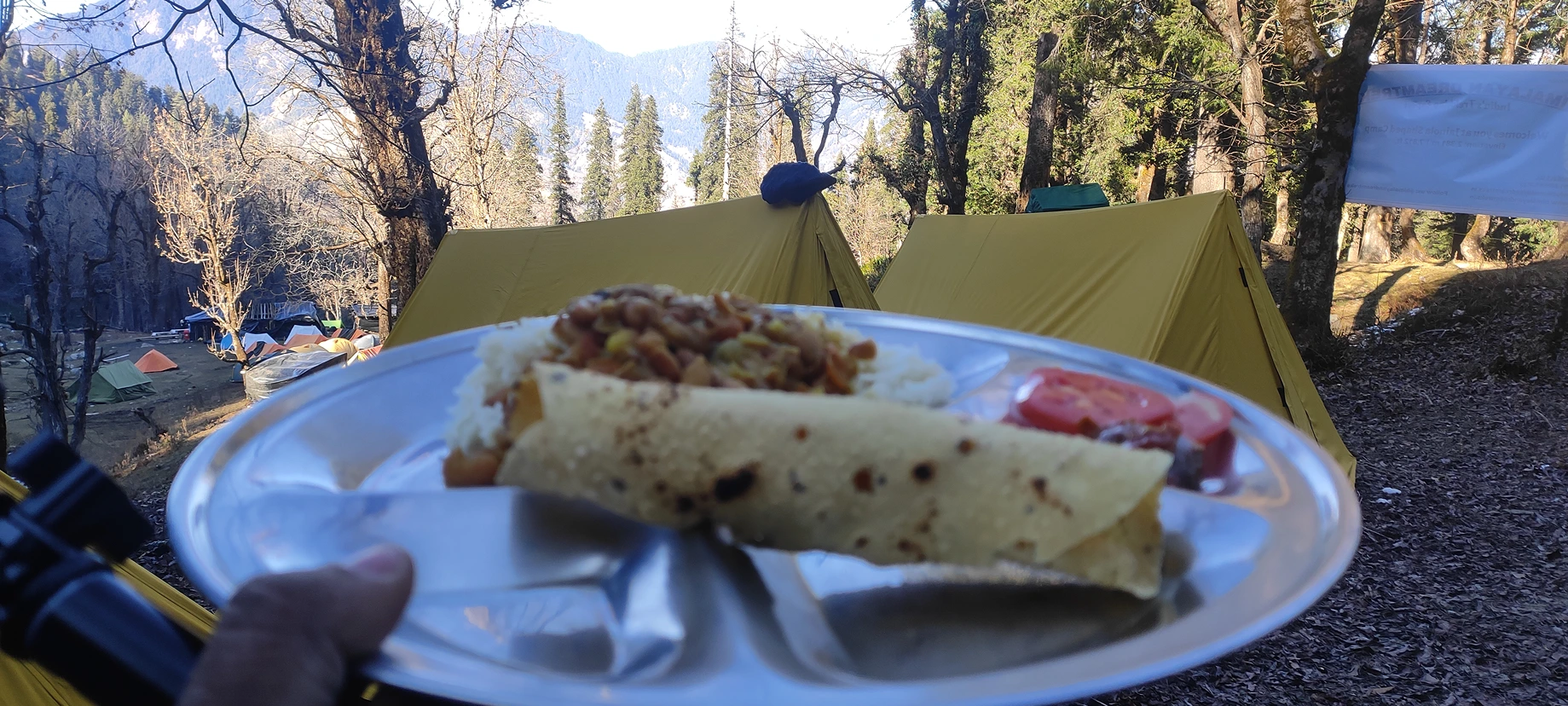
 The food is simple, nutritious, and vegetarian, suitable for high altitude. It includes meals like roti, rice, dal, subzi, and sometimes pasta or noodles. Eggs are generally served for breakfast/dinner. Non-vegetarian food is typically avoided to aid digestion at altitude.

It is highly recommended to offload your main rucksack to a mule or porter (available at an optional extra cost) and trek only with a lighter daypack. Carrying a heavy bag at high altitudes greatly increases the risk of fatigue and AMS.

There is usually no electricity or mobile network coverage past the base camp (Badrinath/Mana Village). It’s essential to carry power banks and spare batteries for all your devices.

Trek Fee
₹ 16,499 ₹18,499
Save ₹2,000 (11% Off)
  • Pick Up: Pipalkoti
  • Drop: Pipalkoti
  • Location: Pipalkoti
Note: Pick-up & drop details will be reconfirmed on WhatsApp after booking.