Kashmir Great Lakes Trek

Trek Fee
₹ 15,499 ₹17,499
Save ₹2,000 (11% Off)
  • Pick Up: Sonmarg
  • Drop: Sonmarg
  • Location: Sonmarg Base Camp
Note: Pick-up & drop details will be reconfirmed on WhatsApp after booking.

Overview

If you’ve ever dreamt of walking through a landscape where every step feels like you’ve wandered into a masterpiece, the Kashmir Great Lakes (KGL) Trek is your destination. Often hailed as one of the most stunning alpine treks in the Indian Himalayas, KGL is not just a hike; it’s an 8-day pilgrimage through what locals reverently call “Paradise on Earth.”

This trek is a celebration of water and meadows, weaving together some of the most spectacular natural scenes Kashmir has to offer. Forget about conquering a single peak; here, you conquer 72 km of trail to witness a succession of pristine, jewel-toned alpine lakes nestled high above the tree line.

What Makes the KGL Trek Truly Unique?

The magic of KGL lies in its dynamic, ever-changing scenery—a rare feature among Himalayan treks. One moment, you are traversing vast, rolling meadows that look like endless green carpets sprinkled with vibrant wildflowers (especially in July and August). The next, you are surrounded by the rugged grandeur of snow-capped peaks.

The true highlight, however, is the perspective you gain from the high-altitude passes:

  • i
    Gadsar Pass (13,750 ft): This is the highest point of the trek, offering a breathtaking, twin-sided vista. From here, you can gaze down at the majestic Vishansar and Krishansar Lakes shimmering on one side, while the emerald-green Gadsar Lake lies nestled on the other.
  • i
    Nichnai Pass and Zaj Pass also reward your ascent, opening up panoramas that make you feel like you are standing on the edge of the world, overlooking the majestic Harmukh Peak and the twin Gangabal lakes.

The Jewel of the Himalayas: Exploring Kashmir’s Pristine Great Lakes

The true essence of this magnificent journey lies in the spectacular glacial lakes you encounter, transforming the trail into a treasury of alpine beauty. The trek is famously named for these stellar water bodies, each a perfect reflection of the towering Himalayan peaks. First, trekkers are greeted by Vishansar Lake, reverently known as the “Lake of Vishnu,” whose shimmering turquoise waters are beautifully framed by lush meadows, offering one of the most iconic, still reflections on the entire route. Nearby lies Krishansar Lake, equally stunning with its clear blue surface mirroring the surrounding steep mountains—a common, serene sight where local shepherds graze their flocks. Moving onward, the trail unveils the emerald-green Gadsar Lake, a picturesque spot famous for the vibrant kaleidoscope of wildflowers that burst into bloom in the surrounding fields during the peak monsoon months. Finally, the journey culminates near the sacred twin high-altitude lakes: Nundkol and Gangabal Lakes. Nundkol sits dramatically at the foot of the majestic Mount Harmukh, while Gangabal’s pristine blue waters complete the scene, forming an unforgettable and postcard-perfect campsite to end this remarkable Kashmir Great Lakes trek.
Highlights

Duration 8D/7N
Difficulty Difficult
Altitude 4191 m
Batch Size 21 people
Base Camp Shitkadi
Pick & Drop Srinagar – Srinagar

Itinerary

Day
1
Arrival in Srinagar and Drive to Shitkadi/Sonamarg Meal

Your epic Himalayan adventure begins upon arrival in Srinagar, the heart of the valley. From there, a scenic drive of approximately three hours takes you along the famous route to the idyllic base camp at Shitkadi, which is near the charming town of Sonamarg (The Meadow of Gold). This day is crucial for your body to begin the process of acclimatization to the higher altitude (around 8,690 ft). Spend your evening relaxing by the glistening Sindh River, surrounded by majestic snow-capped peaks and the first hint of the lush meadows that will soon become your daily path. Getting a good rest here is key, as the real trekking begins tomorrow.

Meals

Breakfast
Lunch
Dinner

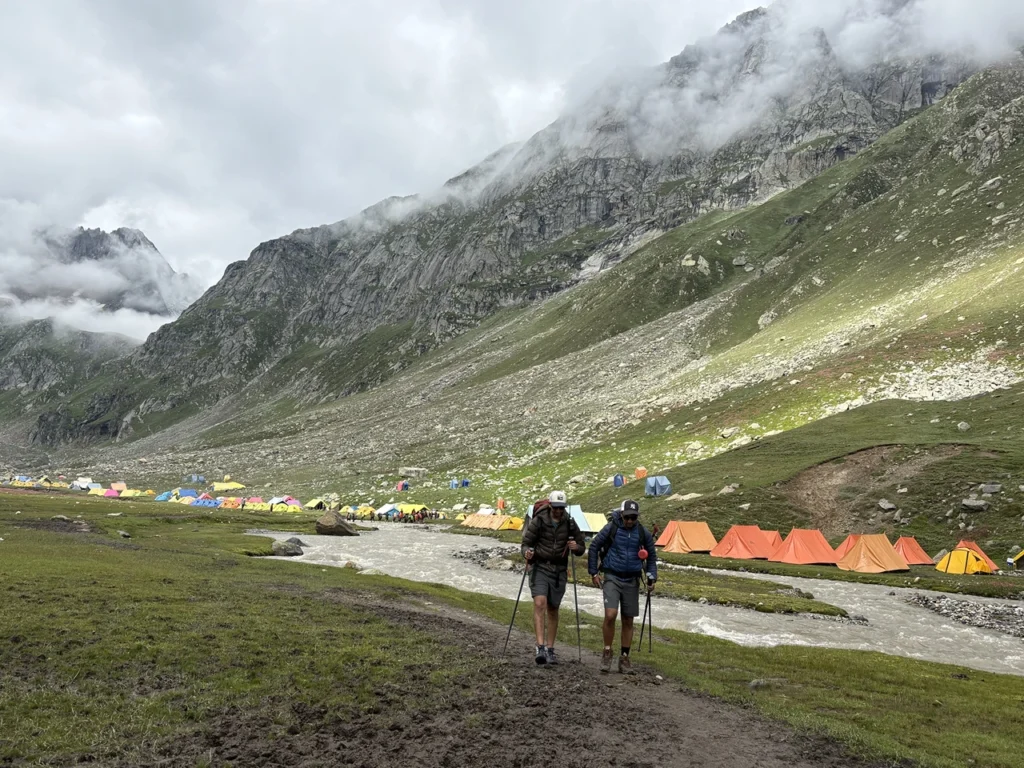
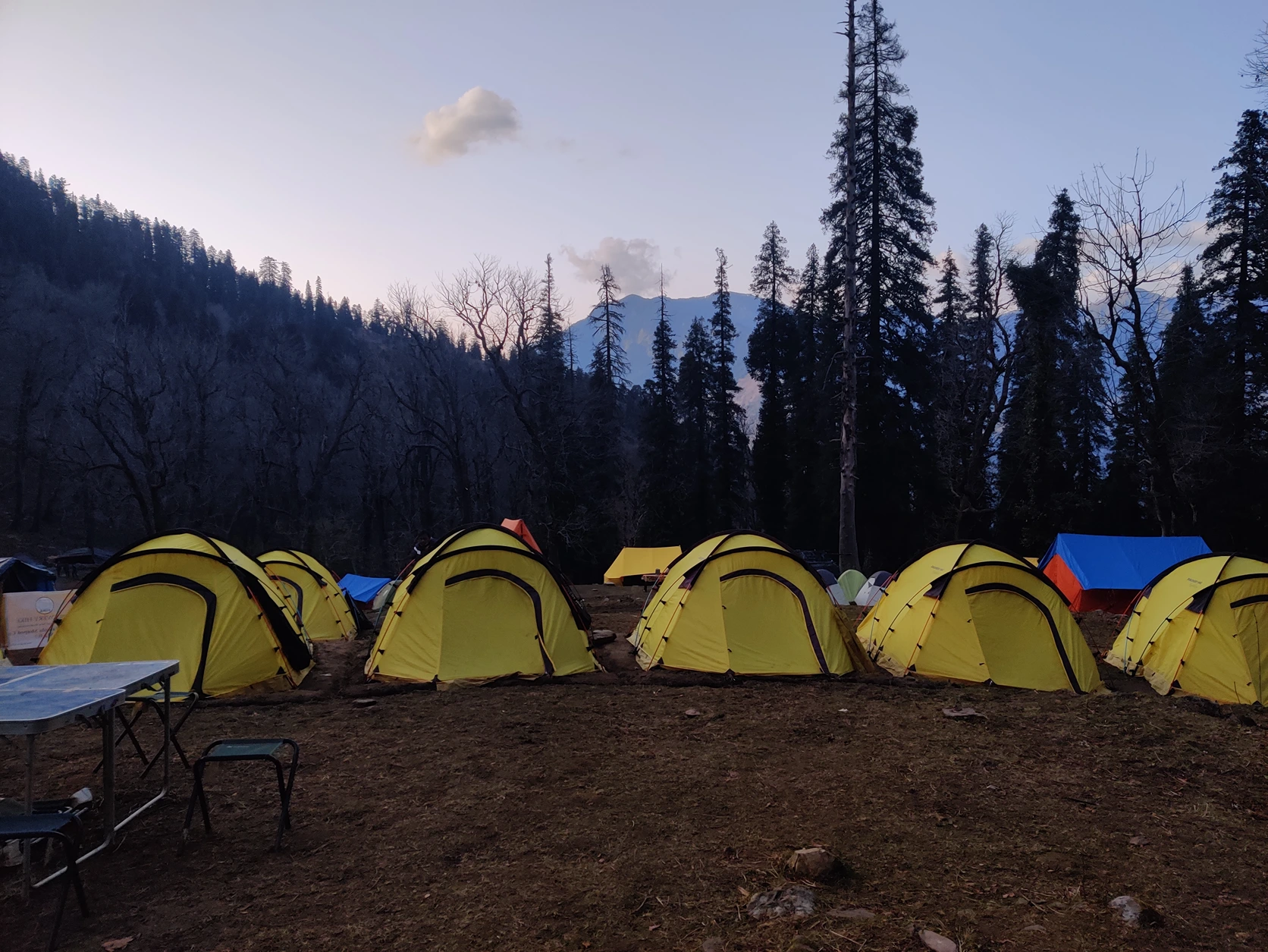
The journey officially begins as we leave the civilization behind. Today’s hike takes us from Shitkadi toward the beautiful Nichnai campsite. The initial trail involves a gradual ascent through thick, aromatic forests of pine, maple, and silver birch. This section offers captivating glimpses of the Sonamarg Valley and the looming Thajiwas Glacier. We continue our climb, eventually reaching the vast, rolling green expanse known as Nichnai Meadows (approx. 11,500 ft). This expansive, peaceful meadow, carved by a crystal-clear stream, makes for a breathtaking campsite where you will be surrounded by mountains and the absolute tranquility of the Kashmir Himalayas.

Meals

Breakfast
Lunch
Dinner

Day 3 is a significant one as we cross our first major hurdle: the Nichnai Pass (approx. 13,100 ft). The trek starts with a steady, moderate ascent that rewards your efforts with panoramic views back toward the Sonamarg valley. Once over the pass, the terrain descends into the majestic Vishansar Valley, often referred to as a valley of medicinal and alpine flowers. Following a long, flat walk through this serene landscape, you will reach the campsite overlooking the jewel-toned Vishansar Lake (approx. 12,000 ft). Just a short, picturesque climb away is its stunning twin, Krishansar Lake. Camping near these mesmerizing bodies of water, which reflect the towering peaks in their pristine surfaces, is a true highlight of the Kashmir Great Lakes trek.
Meals

Breakfast
Lunch
Dinner

Prepare for the trek’s most challenging and rewarding day, as we conquer the highest point: Gadsar Pass (approx. 13,750 ft). The morning begins with a steep ascent from Krishansar, providing an unforgettable view of both Vishansar and Krishansar Lakes side-by-side—a truly iconic moment. From the summit of Gadsar Pass, a long but scenic descent awaits. Along the way, you will be treated to the first view of Yamsar Lake and finally arrive at the stunning Gadsar Lake (The Lake of Flowers). This emerald-green lake, surrounded by carpets of vibrant wildflowers during the summer and monsoon seasons, forms one of the most picturesque campsites of this entire Himalayan trek.

Meals

Breakfast
Lunch
Dinner

Today’s trek is a moderate and pleasant walk across vast expanses of uninterrupted green and gentle slopes. The journey continues toward the Satsar Valley (approx. 11,970 ft). Satsar literally means ‘Seven Lakes,’ and while some are seasonal, you will be walking through the region that holds this incredible chain of interconnected alpine lakes. The trail requires navigating the undulating terrain of the ridge line, which offers continuous, impressive views of the towering mountain faces. This day is about soaking in the sheer scale of the Kashmir meadows and the immense, quiet beauty of the high-altitude landscape.

Meals

Breakfast
Lunch
Dinner

This is another day of significant altitude change and scenery transition. We trek from Satsar, ascending a ridge that culminates in the crossing of Zaj Pass. From the top of this pass, you are rewarded with what many consider the single most striking panorama of the entire KGL trek: an aerial view of the twin glacial lakes, Nundkol and Gangabal, lying dramatically beneath the massive, snow-laden slopes of Mount Harmukh (The highest peak visible on the trek). The descent leads us to the spacious and beautiful campsite near the sacred Nundkol Lake, just moments away from the larger Gangabal Lake. This is one of the grandest and most serene settings for a night under the stars.

Meals

Breakfast
Lunch
Dinner

Take a well-deserved rest day to fully absorb the peaceful atmosphere of this incredible campsite. You can explore the vast shores of the two largest lakes, Gangabal and Nundkol, or choose a short, acclimatization-friendly hike towards the slopes of Mount Harmukh for even more spectacular views. This downtime allows you to relax, recover, and capture the immense beauty of the Kashmir Great Lakes region. The reflection of the mountain in the deep blue waters of Nundkol provides endless opportunities for photography and quiet contemplation.

Meals

Breakfast
Lunch
Dinner

The final day marks the conclusion of the trekking portion of the Kashmir Great Lakes adventure. We begin the long, gradual descent from the Gangabal basin, which eventually becomes a steep trail leading through beautiful, dense pine forests. The trail brings you back below the treeline and into a region dotted with traditional Gujjar and Bakarwal huts, marking the return to civilization. The trek officially ends at the historic village of Naranag (approx. 7,450 ft), famous for its ancient temple ruins. From Naranag, a scenic road journey takes you back to Srinagar (approx. 3 hours), leaving you with a lifetime of memories from the jewel of Indian trekking.

Meals

Breakfast
Lunch
Dinner

Good to know

Inclusions

  • Accommodation on the Trail:
  • All tented accommodation (usually on a twin-sharing basis) during the 7 days/6 nights on the trek route (e.g., Nichnai, Vishansar, Gadsar, Satsar, Nundkol).
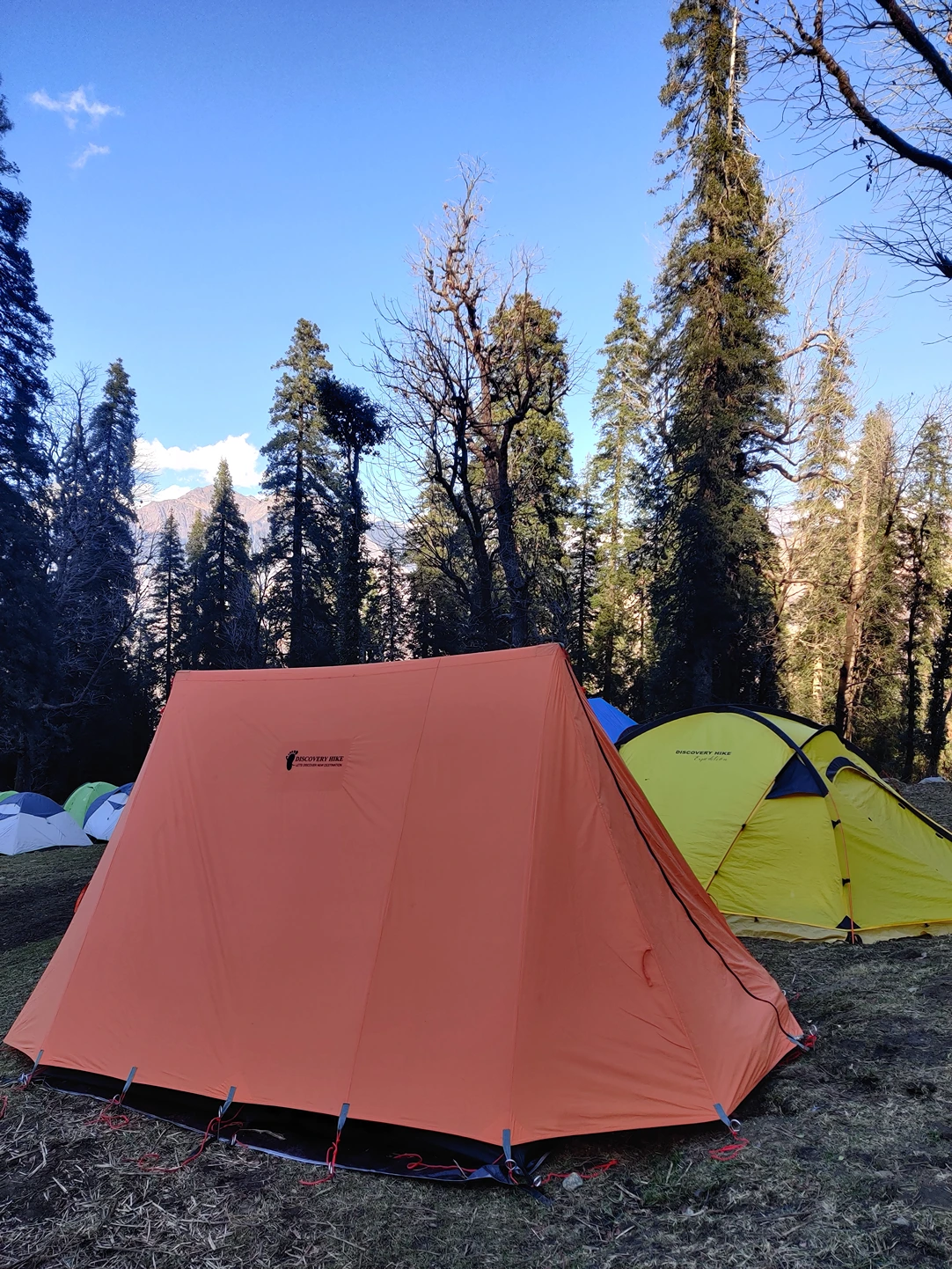
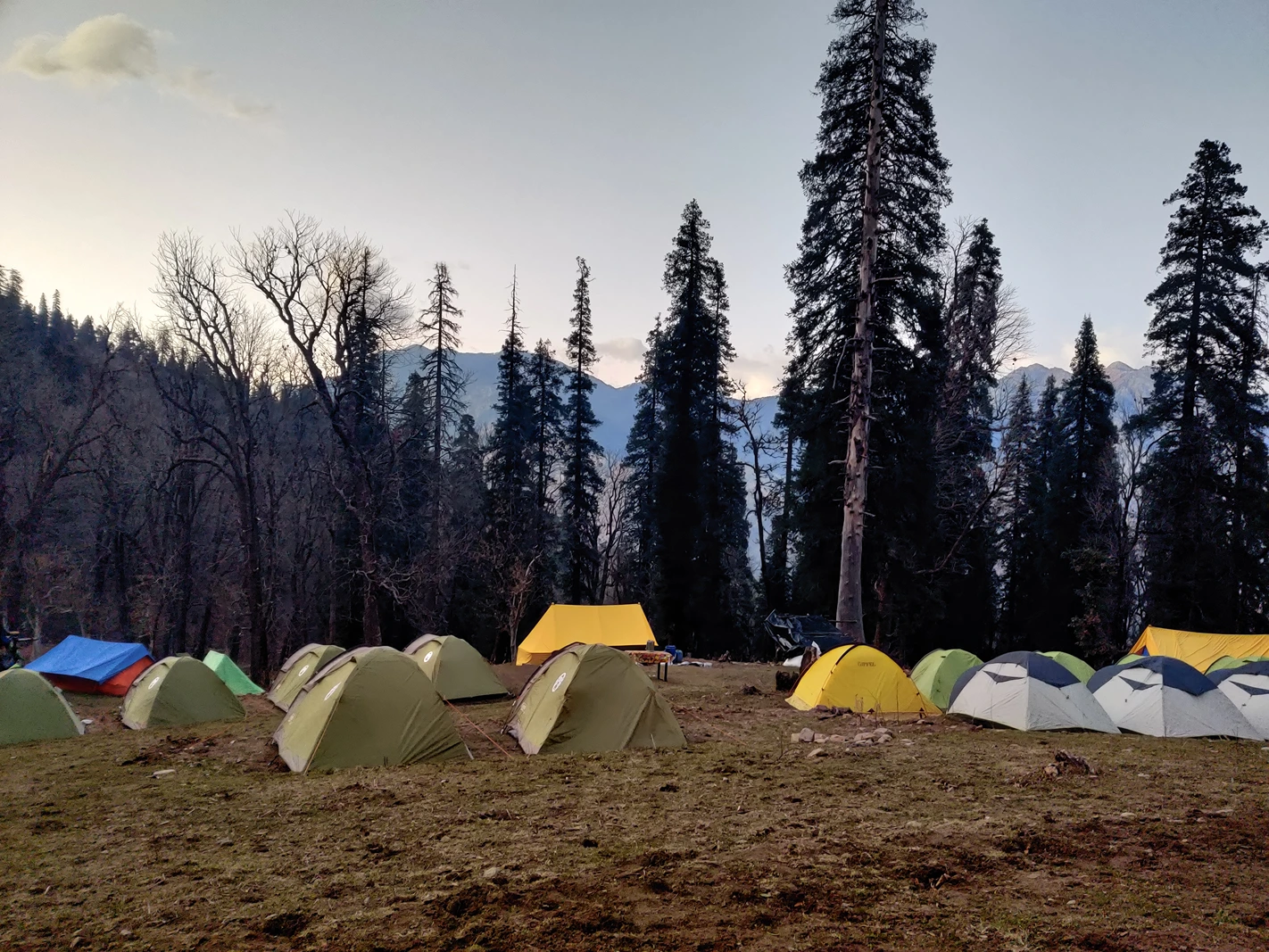
  • Campsites are set up in the most scenic locations across the alpine meadows and near the pristine lakes.
  • Meals:
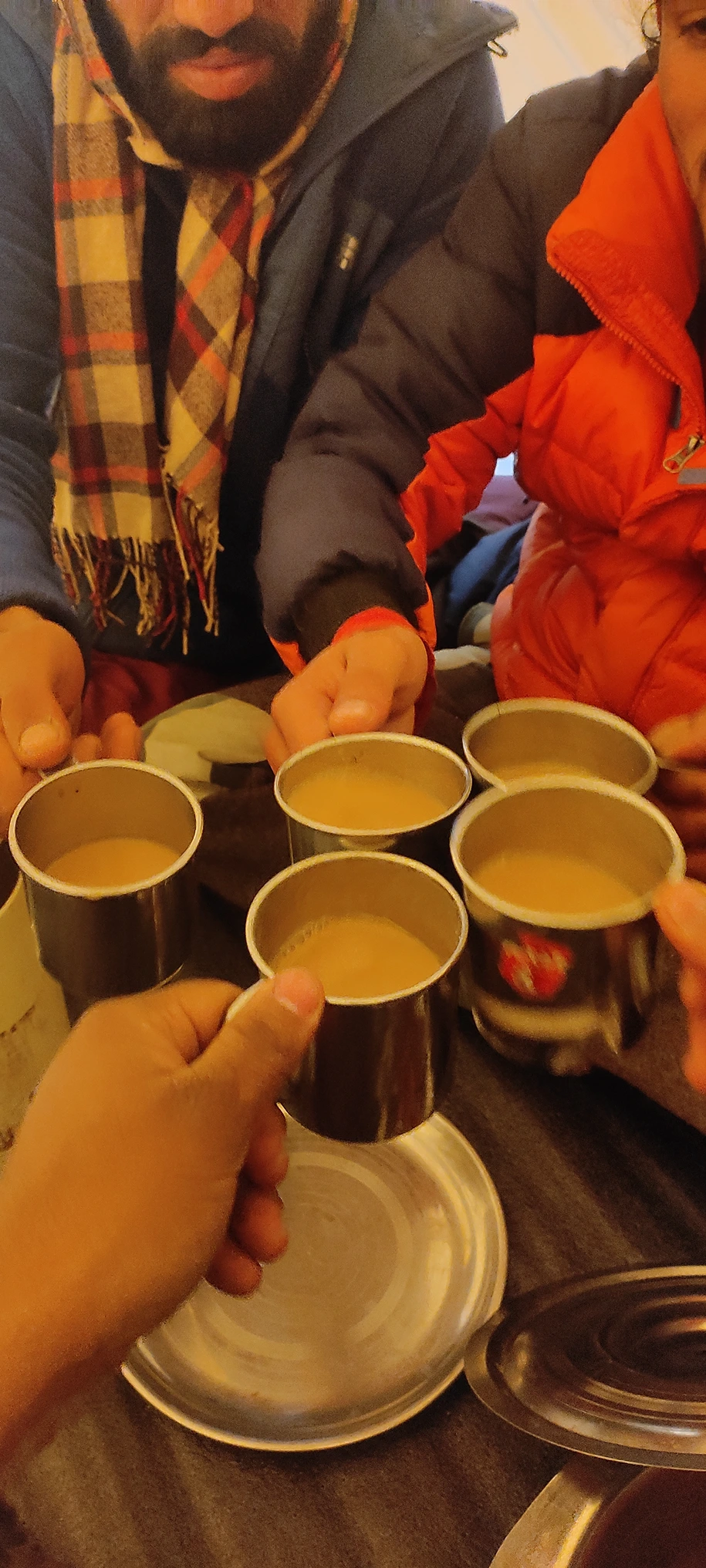
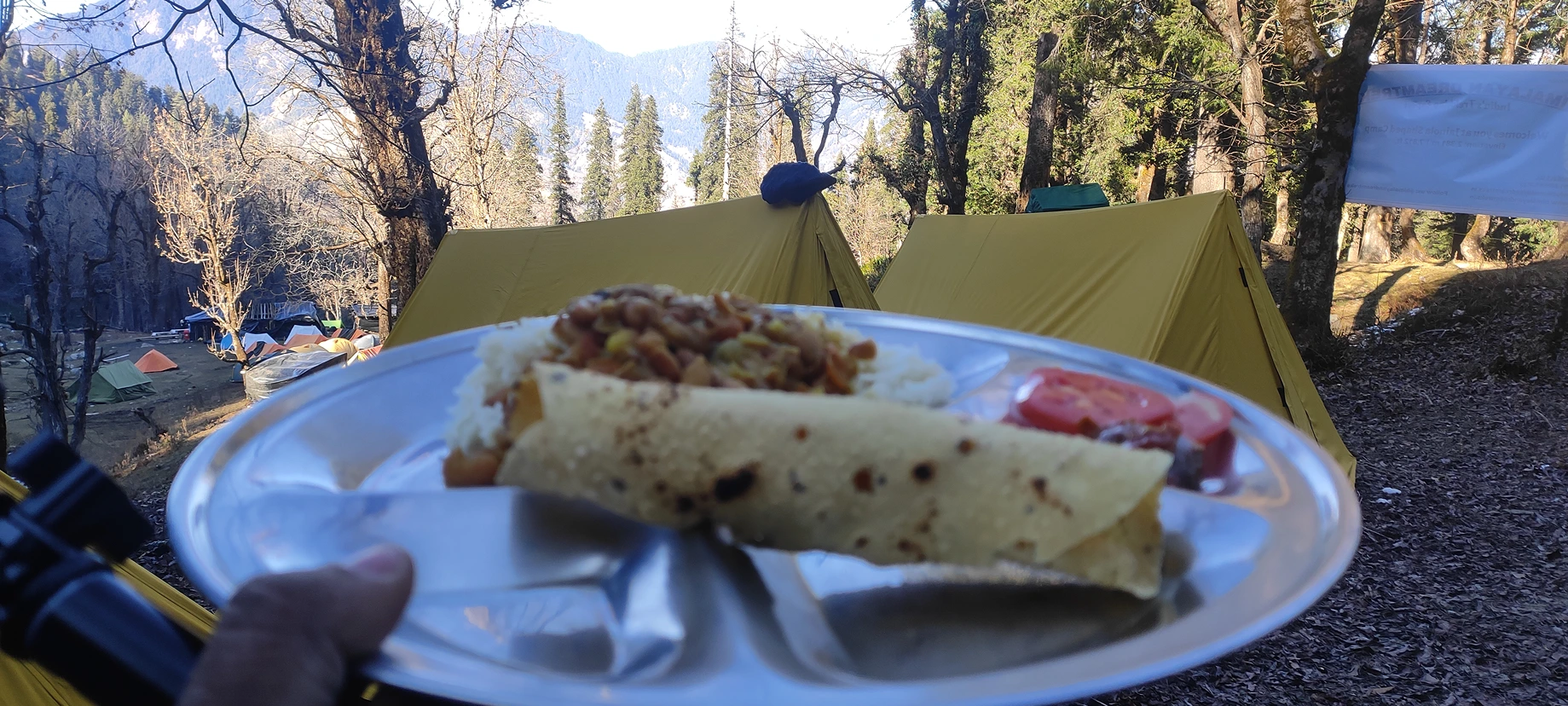
  • All meals are provided from the dinner on Day 1 to the breakfast on the final trekking day (typically vegetarian, egg options included). This includes hot, nutritious breakfasts, packed lunches for the trail, and warm dinners, plus evening tea and snacks.
  • Trekking & Safety Equipment:
  • High-quality sleeping bags, sleeping mats, and all necessary kitchen/dining tent equipment.
  • Comprehensive First-Aid Kit and the presence of essential safety gear like an Oxygen Cylinder and a Pulse Oximeter throughout the trek.
  • Trek Permits and Fees:
  • All necessary forest entry permits, camping charges, and relevant government fees required to trek the Kashmir Great Lakes route.
  • Staffing & Support:
  • Services of an experienced, certified Trek Leader and local guides knowledgeable about the route, culture, and high-altitude emergencies.
  • A dedicated support crew, including cooks and helpers, to manage all campsite logistics.
  • Transportation (Base to Base):
  • Transportation from the pick-up point in Srinagar (often Dal Gate or TRC) to the base camp at Shitkadi/Sonamarg on Day 1.
  • Transportation from the trek endpoint at Naranag back to Srinagar on the final day.
  • Luggage Offloading (Central Luggage):
  • Offloading of common gear and supplies (kitchen, tents, food) carried by mules or porters.

Exclusions

  • Personal Travel to/from Srinagar:
  • Your flights, train tickets, or personal transportation costs to reach Srinagar on Day 1 and your journey back home from Srinagar after the trek.
  • Accommodation/Meals in Srinagar:
  • Any hotel, guesthouse, or houseboat stays, and meals in Srinagar (before Day 1 or after the final day of trekking).
  • Personal Trekking Gear & Clothing:
  • Rent or purchase of personal equipment such as trekking shoes, jackets, gloves, waterproof layers, and headlamps.
  • Insurance:
  • High-Altitude Trekking Insurance is mandatory for your own safety and is typically purchased by the trekker separately.
  • Personal Offloading Fees:
  • Charges for offloading your personal backpack (beyond the weight limit for the central duffel bag, if applicable). This requires payment to hire an extra mule or porter.
  • Emergency Costs:
  • Any unforeseen expenses arising from emergency rescue, medical evacuation, or any changes to the itinerary due to weather, road closures, or natural calamities.
  • Tips & Gratuities:
  • Tips for the local trekking team, guides, cooks, and support staff, which are always appreciated.
  • Snacking on route:
  • Cost of any bottled water, soft drinks, or personal snacks/energy bars purchased along the route (where available) or carried by you.
  •  

Things to Carry

I. Head & Face
Woolen Cap / Beanie

Must cover ears. Essential for retaining body heat.

Balaclava / Neck Gaiter

Crucial for summit day to protect the nose and mouth from cold wind.

UV-Protection Sunglasses

MANDATORY. Snow glare is intense and can cause snow blindness. Must be UV protected.

II. Upper Body
Base Layer (2–3)

Thermal tops (full sleeve). Must be synthetic or Merino wool. NO COTTON.

Mid Layer (2)

Fleece jacket (thick). Your primary source of warmth.

Outer/Shell Layer (1)

Padded jacket (Polyfill/Down). Heavy, windproof, and water-resistant.

III. Lower Body
Base Layer (1–2)

Thermal bottoms (leggings).

Trekking Pants (2)

Quick-dry, synthetic trekking trousers. Avoid jeans/shorts.

IV. Hands & Feet
Trekking Shoes (1 Pair)

High-ankle, sturdy, waterproof trekking boots with good grip.

Socks (5–6 Pairs)

3–4 pairs of thick woolen/synthetic trekking socks (for the day) and 2 pairs of dry woolen socks (for sleeping only).

Gloves (2 Pairs)

1 pair of woolen/fleece inner gloves and 1 pair of heavy, waterproof outer gloves.

V. Accessories
Headlamp

MANDATORY. Carry extra batteries.

Water Bottle / Thermos

Carry a 1-liter bottle and a thermos to keep water from freezing.

Sunscreen (SPF 40+) & Lip Balm

Essential for high-altitude UV protection.

Personal Toiletries & Medication

Toothbrush, wet wipes, and any personal prescription drugs.

Daypack (20–30L)

For carrying water, jacket, snacks, and personal items during the trek.

VI. Provided Gear
From Our Side

Sleeping Bag, Sleeping Mat, Tents, Crampons, Gaiters, and Trekking Poles (use optional).

How to reach

The journey to the KGL base camp is undertaken in two main stages: first, arriving in Srinagar, and second, transferring from Srinagar to the base village near Sonamarg.

1. Reaching Srinagar (The Gateway)

Srinagar serves as the essential gateway for all major treks in the Kashmir Valley. You have three primary options for reaching the city:

A. By Air (Recommended)

  • i
    Nearest Airport: Sheikh ul-Alam International Airport (SXR), Srinagar.
  • i
    Recommendation: This is the quickest and most popular method. The airport is well-connected to major Indian cities like Delhi, Mumbai, and Bengaluru.
  • i
    Tip: Book your flight to arrive by noon on Day 1 of your trekking itinerary, as the onward drive to the base camp takes several hours.

B. By Rail

  • i
    Nearest Major Railhead: Jammu Tawi Railway Station (JAT) or Udhampur Railway Station (UHP).
  • i
    The Connection: Srinagar itself does not have a direct, fully operational railway connection to the main Indian network. After arriving at JAT or UHP, you must take a taxi or bus for the 6 to 8-hour road journey to Srinagar.

C. By Road

  • i
    Connectivity: National Highway 44 (NH44) connects Srinagar to the rest of India, passing through Jammu and the crucial Jawahar Tunnel.
  • i
    Travel Time: The drive from Jammu to Srinagar takes approximately 8–10 hours, subject to weather and road conditions. This option is suitable if you are driving or taking an overnight bus.

2. Getting from Srinagar to the Base Camp

Once you are in Srinagar, the next and final step is the transfer to the KGL starting point, which is typically the village of Shitkadi, located just before Sonamarg.

  • i
    Base Camp Destination: Shitkadi / Sonamarg (Altitude approx. 8,690 ft / 2,650 m).
  • i
    Distance: Approximately 80–90 kilometers.
  • i
    Time Taken: About 3 to 4 hours of driving.

A. Pre-Arranged Trek Transport (Most Common)

  • i
    If Booking with a Trek Operator: The most convenient option. Your trek operator will almost always include and arrange private or shared transportation from a designated pick-up point in Srinagar (such as the Tourist Reception Centre—TRC, or Dal Gate) directly to the base camp at Shitkadi.
  • i
    Ease of Travel: This ensures you travel with your group, simplifying logistics and eliminating negotiation for taxi fares.

B. Private Taxi or Shared Cab

  • i
    Private Taxi: You can hire a private taxi from Srinagar. This offers flexibility but is the most expensive option. Ensure the driver knows you need to go to the KGL base camp at Shitkadi, not just Sonamarg town, as the exact camp location may vary slightly.

Shared Cab: Shared taxis are available near the TRC in Srinagar and are a more budget-friendly option. You will need to wait for the cab to fill up before departing, and you may need to walk a short distance to your final campsite after being dropped off on the main road.

How to prepare your body and mind for the trek

Your Mind & Body Compass

KGL is the perfect choice for a first-time wellness trekker, but a reasonable level of fitness is essential to ensure you enjoy the experience, especially given the rapid altitude gain.

Physical Conditioning (8 Weeks Prior):

  • i
    Cardiovascular Fitness: Commit to a daily routine of 4-5 kilometers of walking or jogging. Focus on building endurance to comfortably manage the steep sections.
  • i
    Strength and Flexibility: Incorporate basic strength training (squats, planks) and gentle Himalayan-focused stretching to condition the muscles and joints for carrying a backpack.

Mental & Respiratory Conditioning:

  • i
    Mastering the Breath: Begin a routine of Pranayama (breathing exercises). Practices like Anulom Vilom (Alternate Nostril Breathing) are vital for improving lung capacity and ensuring a smooth, relaxed acclimatization at high altitude.
  • i
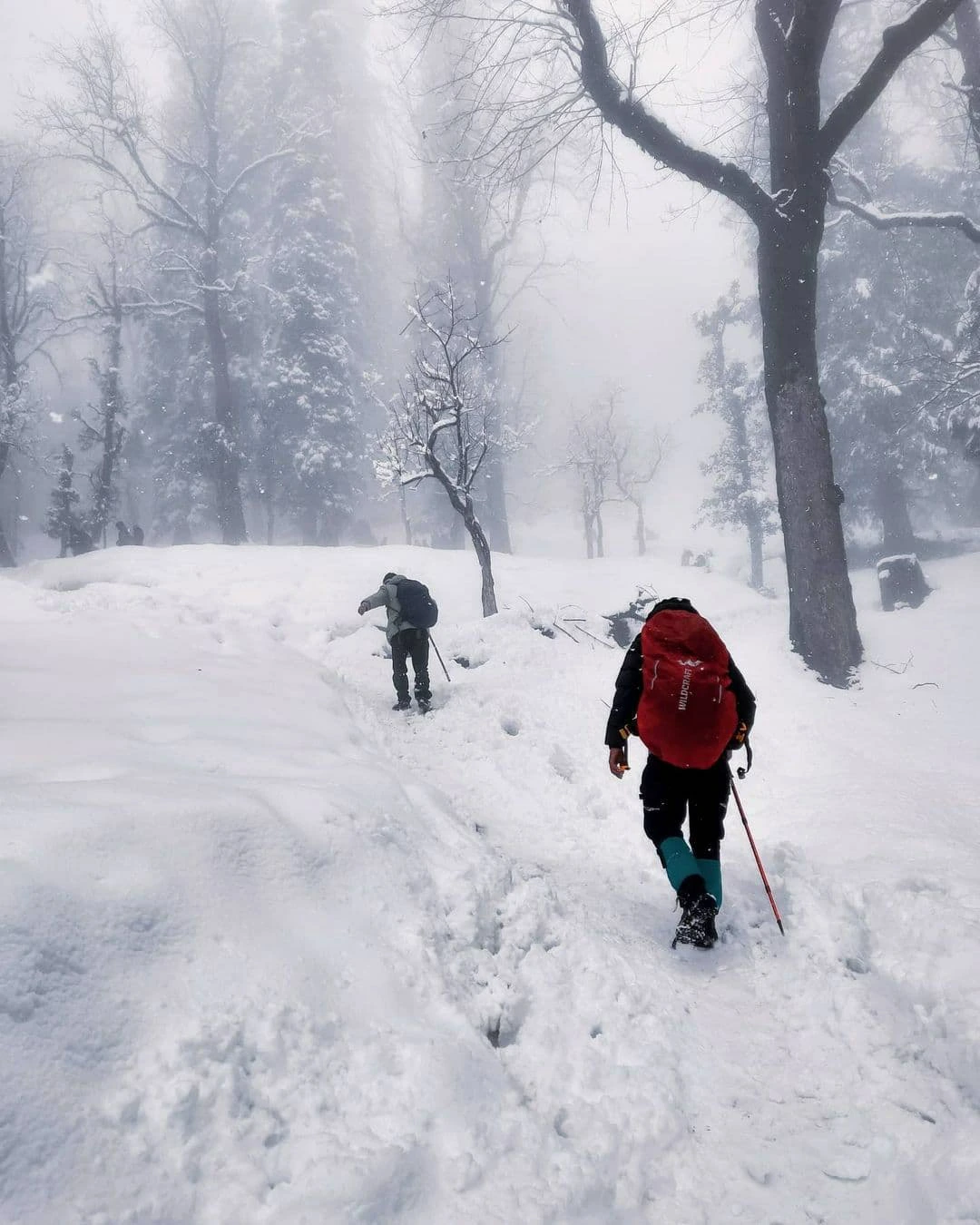
    Weather Readiness: Be prepared for the transformative nature of Himalayan weather. While daytime can be manageable (10°C to 15°C), winter nights are intensely cold, dropping to -4°C or lower. Our high-quality gear is provided to support your journey safely through the cold.

Refund & Cancellation

We aim for clear and fair practices regarding cancellations. We know plans can change, and our policy is designed to balance flexibility for you with the operational needs of running a trek.

If Crux Himalaya Cancels Your Trek

  • If we are forced to cancel a trip for reasons beyond our control (such as natural disasters, route closures, or governmental mandates), you will receive a Trek Voucher. This voucher is valid for one year and can be applied toward the original trek or any other available trek.

  • If the cost of the new trek is higher, you must pay the difference. If the cost of the new trek is lower, we will refund the surplus amount.

  • If the cancellation is due to insufficient bookings (fewer than three participants), you will receive a full monetary refund.

If You Cancel Your Trek

Cancellation Window Refund Notes
More than 30 days prior to the trek start date 100% refund Full refund of trek fee
Between 15 and 30 days prior to the trek start date 50% refund Balance forfeited
Within 1 to 15 days prior to the trek start date No refund Pre-booked logistics; refund not applicable

FAQs

Moderate to Difficult. While not overly technical, it involves long walking days (6-8 hours), significant daily elevation changes (steep ascents and descents, especially over passes), and high altitude. It requires good physical fitness and endurance.

It typically takes 6 nights and 7 days or 7 nights and 8 days, covering a distance of approximately 70-75 km.

The highest point is Gadsar Pass, at an altitude of approximately $13,750$ feet ($4,191$ meters).

It’s best suited for trekkers with some prior high-altitude trekking experience and a good fitness level. A fit beginner who trains well can attempt it.

July to mid-September is the ideal window.

July & August: The meadows are in full bloom with wildflowers, and the weather is generally pleasant. Kashmir lies in a rain-shadow region, so it receives less heavy monsoon rain than the rest of India, making it an excellent “monsoon trek.”

September (Early): The flowers start fading, but the skies are usually clearer, offering spectacular views, and there are fewer crowds. Temperatures begin to drop, especially at night.

You should be able to comfortably run 5 km in 30-35 minutes or cycle 20 km in 60 minutes. Start a fitness routine (cardio, strength, and endurance) 8-10 weeks before the trek.

Acclimatize properly: Take the itinerary’s rest days and gradual ascent seriously. Stay hydrated by drinking plenty of water. Walk slowly and inform your guide immediately if you experience symptoms like headache, nausea, or dizziness.

Yes, the trekking route itself is safe, and operators follow standard mountain safety protocols. It is highly recommended to trek with an experienced local guide/operator who is familiar with the terrain and has emergency response plans.

Yes. Trekking in this region requires permissions, usually from the Forest and Tourism departments. Most trekking operators handle all the necessary permits (including a mandatory medical/fitness certificate) for you, but you must carry a valid government-issued photo ID (Aadhaar/Passport).

The most common itinerary starts near Sonamarg (Shitkadi Base Camp) and ends at Naranag.

You will be staying in tents on a twin-sharing basis at designated campsites throughout the trek.

Layered Clothing (thermal wear, fleece, down jacket), Waterproof/Windproof Jacket & Trousers (essential due to unpredictable weather), Sturdy Trekking Boots (high ankle, waterproof, and well broken-in), Trekking Poles (highly recommended), Sun protection (hat, sunscreen, sunglasses), and a Personal First Aid Kit (including any personal medication and AMS medication like Diamox, consulted with a doctor).

No. Mobile network and electricity are generally not available on the trail after the base camp (Sonamarg). Be sure to finish all important calls and use a postpaid SIM (prepaid SIMs from other states do not work in Kashmir) before leaving Sonamarg. Carry a power bank.

Trek Fee
₹ 15,499 ₹17,499
Save ₹2,000 (11% Off)
  • Pick Up: Sonmarg
  • Drop: Sonmarg
  • Location: Sonmarg Base Camp
Note: Pick-up & drop details will be reconfirmed on WhatsApp after booking.